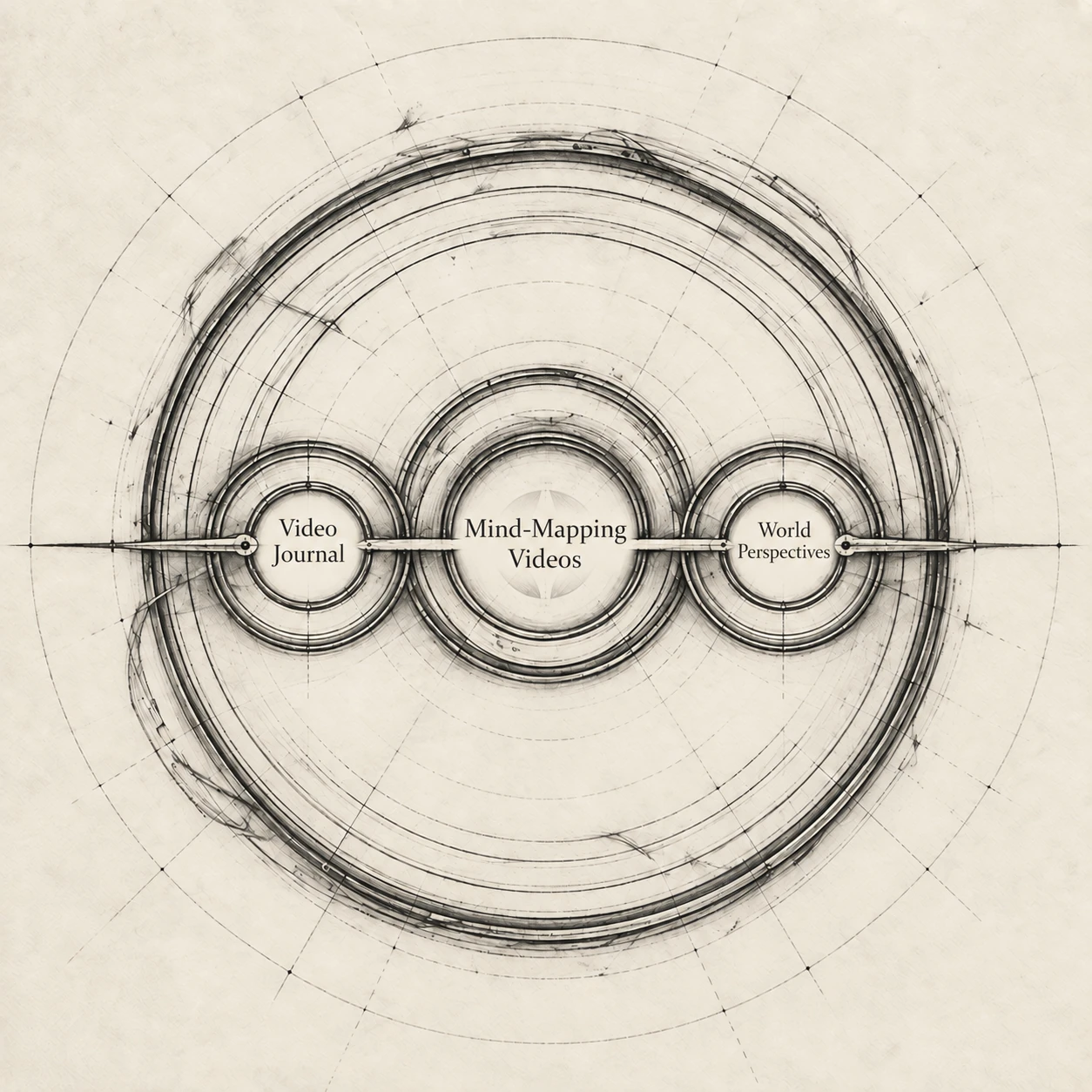

Understanding grows when an observation becomes a relation, a relation becomes a usable function, and that function can be tested in another setting.
Keep the observation distinct.
Begin with what you can notice: a shape, sensation, image or event. Give it a stable place so you can return to it. Keep what appeared separate from what you infer about it.
Build one relation at a time.
Hold aspects together and name how they connect. Compare their roles, their order and the conditions that change the relationship. The shapes organise these operations; they are invitations to practise, not categories of people.
Turn the pattern into a function.
Describe what the relation lets you do. A function can be an equation, a conditional rule or a short procedure: when this condition holds, try this action and expect this result. Include the limits of the rule.
Carry the structure into another setting.
Ask which roles stay the same, which details change and where the analogy stops working. An example is useful when it helps you form a prediction you can check.
Return, compare and revise.
Recall an earlier observation before consulting its record. Compare the two, preserve the difference and adjust the model. Your own interpretations are part of what can be examined.
Let breathing support attention.
The optional rhythm belongs to the same practice. Keep breathing natural and comfortable, with no holds or forced depth. Pause or stop the guide whenever you need to; noticing and reflection do not have to fit a deadline.
Personal interpretations are reviewed by you. The practice does not measure IQ, diagnose ability or establish that an interpretation is true.
Choose a shape ↗